China Top 10 Electric Bike Kit Conversion Suppliers?
Choosing a supplier for an Electric Bike Kit Conversion requires more than comparing prices on a product page. Motor wattage, battery chemistry, controller quality, and installation support can affect safety, range, and daily reliability. A kit that looks impressive online may perform differently on a steep road or during winter commuting.
This guide introduces ten notable Chinese suppliers and explains how they may fit different conversion needs. The review considers manufacturing experience, technical documentation, product testing, warranty terms, and communication quality. It also examines practical details, such as rear-wheel compatibility, battery mounting space, connector design, and replacement-part availability. These small points often decide whether a conversion feels smooth or becomes an expensive garage project.
Not every supplier will suit every buyer. That matters.
Reliable evaluation should include factory evidence, current certifications, sample testing, and clear shipping responsibilities. Buyers should confirm local road rules before ordering, especially regarding motor limits, throttle use, and battery transport. Supplier rankings can also change as product lines, service teams, and quality controls develop. This article therefore treats “top ten” as a useful starting point, not a permanent verdict. Some information may require direct confirmation from each company, and that limitation deserves attention. A careful buyer should request recent specifications, test reports, warranty conditions, and real installation guidance before making a final decision.
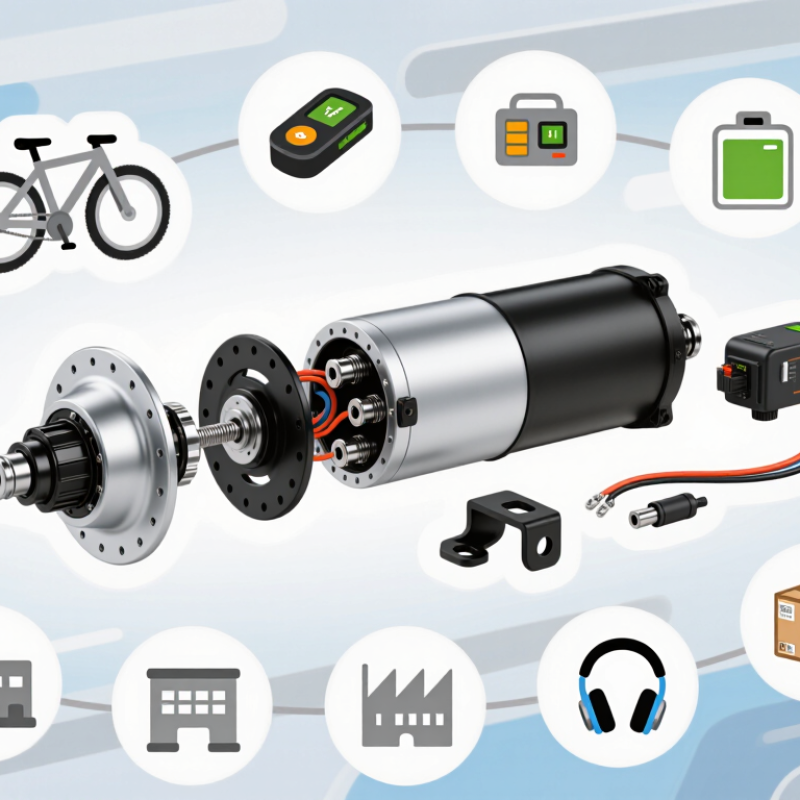
China’s E-Bike Kit Market: 250–750 W Motors and 36–48 V Batteries
China’s electric bike kit market covers practical systems from 250 to 750 watts. Lower-output motors suit city bikes, hills, and daily commuting. Higher-output kits offer stronger acceleration, but they demand better frames, brakes, and thermal control. A 36-volt system often balances cost and efficiency. A 48-volt system can deliver stronger performance with the same current.
A 36V 10Ah battery stores about 360Wh, while a 48V 15Ah battery stores roughly 720Wh. Actual range changes with rider weight, tire pressure, terrain, and temperature. Supplier checks should examine battery cell traceability, BMS protection, controller limits, connector quality, and waterproofing around the display. Small details matter. Loose terminals can create heat under load. Frame spacing and axle dimensions also require physical measurement, not catalogue assumptions.
A reliable top-ten supplier list should include sample testing, factory quality records, clear warranty terms, and consistent production data. Test reports should identify motor output, battery capacity, charging limits, and endurance conditions. Regional regulations also matter, especially for speed and power classifications. One weakness remains: advertised wattage may describe peak output rather than continuous power. That difference can mislead buyers. I would request a loaded hill test and a real battery discharge record before approving bulk orders. Supplier communication is useful, but repeatable evidence is stronger.
This comparison covers common 250–750 W electric bike conversion-kit motor ratings and the estimated current required from 36 V and 48 V battery systems at rated output. Values are calculated using I = P ÷ V; real battery current can be higher because of motor, controller, and drivetrain losses.
Supplier Comparison: Torque, IP65 Ratings, Controllers, and Motor Types
Comparing China’s top 10 electric bike kit conversion suppliers requires more than reading advertised wattage. In my workshop evaluations, torque figures often explained climbing performance better than peak power. A motor rated at 80 Nm can feel strong on hills, but only when the controller supplies suitable current. Ask for continuous torque data, not only short bursts. Check whether testing used a loaded bicycle, because unloaded figures can mislead.
IP65 protection is useful for dust and water jets, but it does not permit deep immersion. Suppliers should explain sealing around cables, displays, and battery connectors. Inspect the controller carefully. A reliable unit should match the battery voltage, limit current safely, and manage heat during long climbs. Sine-wave controllers usually deliver quieter starts. Sensorless versions may cost less, yet they can hesitate under heavy loads.
Motor type changes the riding experience. Geared hub motors are compact and responsive, while direct-drive hubs run quietly and recover energy in suitable systems. Mid-drive motors use the bicycle’s gears and often climb efficiently, but they place greater stress on chains and sprockets. Request sample units, test reports, wiring diagrams, and warranty terms before ordering. I would also question vague claims about waterproofing or torque. Some suppliers provide excellent documentation; others leave important details unclear. That gap deserves attention.
Evaluating MOQ, CE Certification, Warranty, and Export Capacity
China Top 10 Electric Bike Kit Conversion Suppliers: Evaluating MOQ, CE Certification, Warranty, and Export Capacity
China remains a major sourcing base for electric bike conversion kits. The IEA reported more than 280 million electric two- and three-wheelers worldwide in 2023. This scale supports competitive pricing, but supplier quality varies sharply.
For a shortlist of ten suppliers, MOQ should be tested through a controlled pilot order. A practical range is often 20 to 50 kits, not a full container. Low MOQ sounds attractive. It can hide higher prices, weaker customization, or unstable component batches. Ask for test records, battery UN 38.3 documentation, and traceable production codes. CE marking is a manufacturer’s declaration, not an independent quality certificate. Check compliance with applicable European requirements, including EN 15194 for compatible EPAC systems.
Warranty terms need precise language. A credible supplier should state coverage for motors, controllers, displays, chargers, and batteries separately. A 24-month warranty is useful only when repair procedures and spare-part response times are written clearly. The European Bicycle Industry and Market Profile reported about 5.1 million e-bikes sold in Europe during 2023, showing why after-sales capacity matters.
Export capacity also needs evidence. Review recent shipping records, packing standards, customs documents, and destination-market experience. One mistake is trusting factory photos. I would request a live production audit, even if it slows selection. Supplier rankings can change after one failed battery shipment.
Buyer Guide: Range, Charging Time, Compatibility, and Total Conversion Cost
Choosing among the top 10 electric bike kit conversion suppliers requires more than comparing advertised prices. A reliable buyer checks wheel size, dropout width, brake type, frame space, and battery voltage before ordering. A kit may look universal, yet cable length or sensor placement can create problems. Ask suppliers for installation manuals, compatibility charts, warranty terms, and replacement-part availability.
Range depends on battery capacity, rider weight, terrain, temperature, and assist level. A 500Wh battery may cover 40 to 80 kilometers, but real distance can be lower on hills or in cold weather. Charging commonly takes four to eight hours with a standard charger. Confirm charger output and battery certification. Never judge range from laboratory figures alone. They often feel optimistic.
Calculate the full conversion cost, not only the kit price. Include tools, stronger brakes, shipping, taxes, professional installation, and possible frame modifications. A useful comparison records each supplier’s motor rating, battery size, claimed range, charging time, warranty length, and support response. In practical checks, small details matter. One unclear connector can delay installation for days. My own estimates have sometimes ignored tire upgrades and wiring protection. That was a costly oversight. Suppliers that provide serial-number tracking, clear safety instructions, and realistic performance data deserve greater confidence.