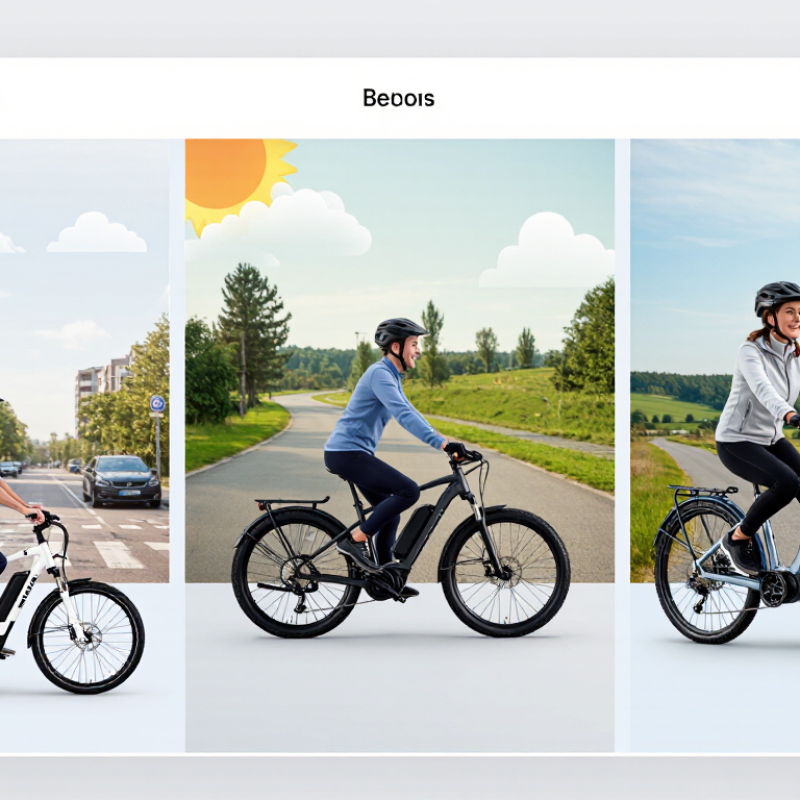
How to Choose an Adult Electric Bike in 2026?

Choosing an Adult Electric Bike in 2026 requires more than comparing prices and motor wattage. The market is expanding, but published estimates vary. Grand View Research valued the global e-bike market at approximately US$43.81 billion in 2023 and projected strong growth through 2030. MarketsandMarkets also expects substantial expansion before 2029. These figures show momentum, not certainty. A forecast is not a promise.

Real-world selection begins with the rider, route, and daily routine. CONEBI’s European Bicycle Industry and Market Profile reported about 5.1 million e-bikes sold across Europe in 2023. That volume suggests growing acceptance for commuting, errands, and short recreational trips. It also creates more confusing choices. A lightweight city model may feel effortless on flat streets, yet struggle on steep roads. A powerful trekking bike may handle hills better, but weigh more than 25 kilograms.

This guide focuses on practical evidence. We will examine frame fit, riding posture, motor assistance, battery capacity, braking performance, tire width, weather protection, and local service support. A battery label alone does not predict range. Rider weight, wind, hills, temperature, and tire pressure matter greatly. Look for recognized safety testing, clear warranty terms, replaceable components, and a dealer who can diagnose faults. Some buyers overlook these details. I have too, when a low price seems attractive. That mistake can become expensive after one wet season. The best Adult Electric Bike is not necessarily the fastest or newest. It should feel stable at a junction, comfortable after an hour, and dependable when the route changes unexpectedly. Estimates differ. Your daily experience matters more.

How to Choose an Adult Electric Bike in 2026?

Define Your Riding Needs, Comfort Preferences, and Daily Use

How to Choose an Adult Electric Bike in 2026?

Start with your real routine, not the longest advertised range. Will you ride five miles to work, carry groceries, or climb steep streets? PeopleForBikes’ 2023 U.S. E-Bike Market Overview reported about 1.1 million e-bikes sold in 2022. That growth reflects practical daily use, not only recreation. Choose a battery that covers your normal trip with reserve power. Cold weather, hills, heavy loads, and frequent starts reduce range. A 500Wh battery may suit many commuters, but your route matters more than the number.

Comfort deserves a careful test. Your feet should reach the ground easily when stopped. The handlebar should not force your shoulders upward. Look for adjustable contact points, a supportive saddle, stable tires, and lights for early-morning rides. A step-through frame can help riders carrying work clothes or groceries. Test the bike on a rough surface. Smooth showroom floors hide problems.

Deloitte Insights estimated that 130 million e-bikes could be sold worldwide from 2020 through 2023, showing how quickly this category has expanded. More choice can create confusion. I once focused too heavily on motor power and ignored the bike’s weight. Carrying it upstairs became frustrating. That was a poor decision. Consider storage, charging access, service support, and your daily lifting limit. A smaller motor may feel better if it keeps the bike manageable. Range claims are estimates, not promises. Test before buying.

Compare Electric Bike Classes, Motors, Batteries, and Riding Ranges

How to Choose an Adult Electric Bike in 2026?

Compare Electric Bike Classes, Motors, Batteries, and Riding Ranges

Electric Bike Classes

Start with the riding class, not the color or display. Class 1 assists only while you pedal and usually stops near 20 mph. Class 2 adds a throttle, which helps when starting on steep streets. Class 3 offers pedal assistance up to about 28 mph, but access rules vary by region. Check local requirements before buying. A comfortable test ride matters more than a fast specification sheet.

Motor Design

Motor design changes the ride dramatically. Hub motors feel smooth and simple on flat roads. Mid-drive motors use the bicycle’s gears better, especially on long climbs. Look for torque, measured in newton-metres, rather than wattage alone. More torque helps with hills and heavier loads. However, maximum power can make the bike feel abrupt. I prefer predictable assistance during crowded commutes.

Battery Capacity and Range

Battery capacity is shown in watt-hours, or Wh. A 500 Wh battery may suit regular urban trips, while longer hills need more capacity. Range depends on rider weight, tire pressure, wind, temperature, terrain, and assistance level. Manufacturers’ figures are useful, but they are not promises. My first range estimate was too optimistic on a windy route. Leave a sensible reserve. A removable battery is practical for apartment charging, though it adds carrying weight. Test the brake feel, frame fit, and charging routine before committing.

Choose the Right Frame, Wheel Size, Brakes, and Suspension

How to Choose an Adult Electric Bike in 2026?

Frame fit affects comfort more than motor power.

During a test ride, your knees should remain slightly bent at full pedal extension. Your shoulders should feel relaxed, not stretched toward the handlebars. A step-through frame helps riders with limited hip mobility, while a diamond frame often feels stiffer under heavier loads. I once chose a frame that looked strong but felt awkward at stoplights. Appearance was not enough. Check the recommended rider height and weight, then test mounting with everyday shoes and a jacket.

Wheel size changes handling.

Smaller wheels can feel nimble in crowded streets and easier to control at low speed. Larger wheels roll more smoothly over cracks, curbs, and loose gravel. Tire width matters too. Wide tires soften rough pavement, but they can add rolling resistance and weight. There is no perfect size. Your route decides.

Brakes deserve careful attention.

Hydraulic disc brakes usually offer smoother control, especially on wet descents or with cargo. Mechanical discs are easier to adjust, but cable tension needs regular inspection. Squeeze both levers before buying. They should feel firm, not spongy. Suspension is useful on broken roads, yet a basic suspension fork can add weight without improving every ride. Look for adjustable preload and a lockout feature.

I prefer modest suspension for mixed commuting, though my choice may be wrong on truly rough trails. Test the bike over a curb-height bump, then check whether the fork rebounds quietly and stays controlled.

Check Safety Features, Legal Requirements, Warranty, and Service

How to Choose an Adult Electric Bike in 2026?

Safety should guide every electric bike decision. During a test ride, squeeze both brake levers and check whether stopping feels smooth. Look for bright front and rear lights, reflectors, a working horn, and tires with clear tread. A stable frame matters, especially when carrying groceries. The battery should lock securely and show no swelling, cracks, or loose wiring. Certification markings can support quality, but they do not replace careful inspection. I once focused too much on motor power and overlooked saddle comfort. That was a mistake.

Legal requirements vary by country, state, and city. Check the permitted speed, motor output, rider age, helmet rules, lighting requirements, and whether registration or insurance applies. Some areas separate electric bikes into different classes. Your chosen bike must match local roads and cycle paths. Ask the seller for written specifications, not vague promises. Rules can change, so verify them with an official transport authority before buying.

Tips: Test the bike on a slope, over a small bump, and during a tight turn. Confirm that the charger has overload protection and clear instructions. Read the warranty carefully. Check coverage periods for the motor, battery, frame, and display. Ask who performs repairs and whether replacement parts are available locally. A long warranty sounds reassuring, but slow service can still leave you without transportation. Keep receipts, maintenance records, and battery-care notes. My advice is practical, not perfect: compare support quality, not only the purchase price.

How to Choose an Adult Electric Bike in 2026? — Safety Features, Legal Requirements, Warranty, and Service

Use this comparison table when evaluating an adult electric bicycle. Legal rules, access restrictions, and equipment requirements differ by country, state, province, and city, so confirm the current rules with the relevant local authority before riding.

Decision Area What to Check Practical 2026 Buying Benchmark Documents or Questions to Request
Motor and Speed Rated motor output, maximum assisted speed, throttle operation, and whether assistance stops when pedaling stops. Choose a model whose assistance mode and speed limit match the legal category in your riding area. Do not rely only on the advertised peak wattage; compare the continuous rated output and control behavior. Ask for the motor rating, maximum assisted speed, operating modes, and a written explanation of throttle and pedal-assist functions.
Legal Classification Whether the bicycle is classified as a pedal-assist cycle, a throttle-assisted cycle, or another vehicle category. In jurisdictions using a three-class system, Class 1 is generally pedal assist up to 20 mph, Class 2 generally includes a throttle up to 20 mph, and Class 3 generally provides pedal assist up to 28 mph. Definitions and access rules vary by jurisdiction. Check the local vehicle code and obtain the classification label, conformity statement, or technical specification sheet.
Rider Eligibility Minimum age, driving licence, registration, insurance, and helmet requirements. Requirements can change according to the bicycle’s class, power, speed, and location. Some areas require helmets for all riders, while others apply age-specific rules. Verify requirements with the transport department, road authority, or local government website before purchase.
Where You May Ride Access to roads, cycle lanes, shared paths, trails, parks, and private property. Do not assume that a legally sold electric bicycle is permitted on every bicycle path or trail. Class-specific access and local signage may apply. Check local path regulations, park rules, trail restrictions, and any required speed limits.
Battery Safety Battery cell protection, enclosure quality, charging controls, thermal protection, and physical damage. Prefer a battery pack with documented safety testing, a battery-management system, over-charge and over-discharge protection, short-circuit protection, and temperature monitoring. Request the battery model number, safety test documentation, charging instructions, replacement procedure, and recall information.
Electrical System Certification Safety certification for the complete electrical system, including the battery, charger, motor, wiring, and controls. Look for a recognized electrical safety certification appropriate to the sales market. A certification for only one component does not necessarily certify the complete system. Ask whether the complete system was tested under the applicable local standard, such as an electrical-system safety standard or an equivalent national requirement.
Charger Correct voltage, current rating, connector type, ventilation requirements, and protection against overcharging. Use only the supplied or explicitly approved charger. Avoid unmarked replacement chargers and do not charge a wet, swollen, hot, or visibly damaged battery. Confirm input and output ratings, charging time, indicator meanings, replacement availability, and safe charging instructions.
Charging Location Fire risk, ventilation, moisture, heat sources, and supervision during charging. Charge on a stable, non-combustible surface in a dry, ventilated area, away from escape routes and flammable materials. Follow the supplied manual and local fire-safety guidance. Check the manual for storage temperature, charging temperature, unattended-charging restrictions, and end-of-life disposal instructions.
Braking System Brake type, rotor size, lever feel, stopping performance, and cut-off switches for motor assistance. For heavier bicycles, hills, wet conditions, or frequent cargo use, hydraulic or well-adjusted mechanical disc brakes can provide useful control. Both brake levers should stop motor assistance where designed to do so. Test braking at low speed, inspect cables and hoses, and ask about pad and rotor replacement intervals and parts availability.
Lighting and Visibility Front and rear lights, reflectors, side visibility, brake-light behavior, and daytime visibility. Choose permanently mounted, road-legal lights with a reliable power source. Reflective elements and bright clothing improve visibility but do not replace required lighting. Confirm whether lights operate from the main battery, whether they remain available when battery power is low, and which local lighting rules apply.
Tires and Wheels Tire width, tread, pressure range, puncture protection, wheel size, spoke tension, and rim condition. Select tires suitable for the intended surface and rider load. Follow the printed pressure range; under-inflation can increase handling and rim damage risks, while over-inflation can reduce grip. Check the maximum tire pressure, approved tire size, spare-tube or replacement-tire availability, and wheel load rating.
Frame and Load Capacity Maximum total system weight, frame size, step-over height, rack capacity, and suspension design. Total system weight normally includes the rider, bicycle, battery, luggage, and accessories. Choose a frame that allows comfortable mounting, braking, steering, and stable parking. Request separate limits for rider weight, rear rack, front rack, child seat, trailer, and towing equipment. Do not exceed the lowest applicable limit.
Controls and Display Power-button placement, assist-level selection, speed display, battery indicator, walk-assist function, and error warnings. Controls should be readable without taking unnecessary attention from the road. The system should clearly indicate faults and should not restart unexpectedly after a power interruption. Test every control, read the error-code section, and ask whether software updates or diagnostic tools are required.
Theft Protection Frame-lock compatibility, removable battery lock, secure parking points, and tracking options. Use a hardened lock through the frame and a fixed object. A removable battery may reduce theft appeal, but it does not replace a proper bicycle lock. Confirm key replacement, battery-lock replacement, tracking privacy settings, and whether the frame accepts common locking methods.
Warranty Coverage Warranty length, covered parts, exclusions, labor, shipping, battery capacity terms, and accidental-damage policy. Compare separate coverage periods for the frame, motor, electronics, battery, charger, display, and wear items. Warranty terms are contractual and may differ by country. Obtain the complete written warranty before purchase. Ask who pays return shipping, whether labor is included, and how battery capacity is measured.
Consumer Rights Mandatory legal guarantees, conformity rights, return periods, and remedies for defective goods. Statutory consumer protections may apply in addition to a commercial warranty. For example, many European Union consumer purchases have a minimum two-year legal guarantee, subject to applicable rules and exceptions. Check the consumer-protection rules in the purchase country and keep the invoice, order confirmation, warranty, and delivery records.
Service Network Qualified repair locations, technician training, diagnostic support, and turnaround time. Prefer a bicycle that can be serviced locally or has a clearly documented mail-in process. Ask how warranty repairs are authorized and whether diagnostics require proprietary equipment. Request the nearest service location, typical repair time, labor rates, diagnostic fees, and escalation process for unresolved faults.
Replacement Parts Availability of brake pads, tires, chains, displays, chargers, batteries, sensors, and proprietary connectors. Standard wear parts should be readily available. Confirm the expected availability period for electronic parts and batteries before committing to a model. Ask for a parts catalogue, current prices, part numbers, lead times, and whether repairs can be performed after the original seller stops trading.
Maintenance Schedule Brake inspection, tire pressure, chain or belt care, fastener checks, battery storage, and software updates. Inspect safety-critical components before every ride. Arrange a professional check after the initial bedding-in period and regularly thereafter, especially for high-mileage or cargo use. Follow the owner’s manual and request a written maintenance schedule. Confirm which tasks affect warranty eligibility.
Test Ride Starting behavior, steering stability, braking, fit, noise, assist transitions, and low-battery behavior. Test on a safe route with turns, slopes, rough surfaces, and controlled stops. The bicycle should accelerate progressively, track straight, and remain controllable without motor assistance. Record the frame size, saddle position, braking distance impression, comfort, error messages, and any unusual heat, smell, vibration, or noise.

Safety reminder: Never use a battery or charger that is swollen, leaking, cracked, unusually hot, smoking, or producing an abnormal smell. Stop using it, move away from ignition sources if it is safe to do so, and follow local emergency and battery-recycling guidance.

Set a Realistic Budget and Evaluate Long-Term Ownership Costs

An adult electric bike should fit your monthly finances, not just your weekend plans. Set a purchase ceiling before comparing motors or displays. Include assembly, a certified helmet, a strong lock, lights, and weather protection. I would reserve 10 to 15 percent for setup surprises. A bike priced at $1,400 can quickly become a $1,650 purchase. That difference matters when rent, repairs, and seasonal storage already compete for cash.

Look beyond the checkout total. Battery capacity affects charging frequency, but real range changes with hills, cold weather, rider weight, and tire pressure. Ask for written warranty terms, battery replacement pricing, and local service availability.

Check whether common parts can be replaced without special tools. A yearly budget should include brake pads, tires, cables, chain care, electricity, and occasional diagnostics. Small expenses accumulate quietly.

I once underestimated storage costs and left a bike in damp weather. Rusted fasteners turned a simple adjustment into an expensive service visit. That mistake changed my checklist. Measure your storage space, add a cover, and plan for secure charging. Compare expected years of use, not only the sale price. Dividing total ownership costs by estimated riding months can expose false bargains. Be honest about your habits. If you rarely ride in winter, a larger battery may be unnecessary. If you commute daily, paying more for durable components could reduce downtime, though not every premium feature earns its price.